
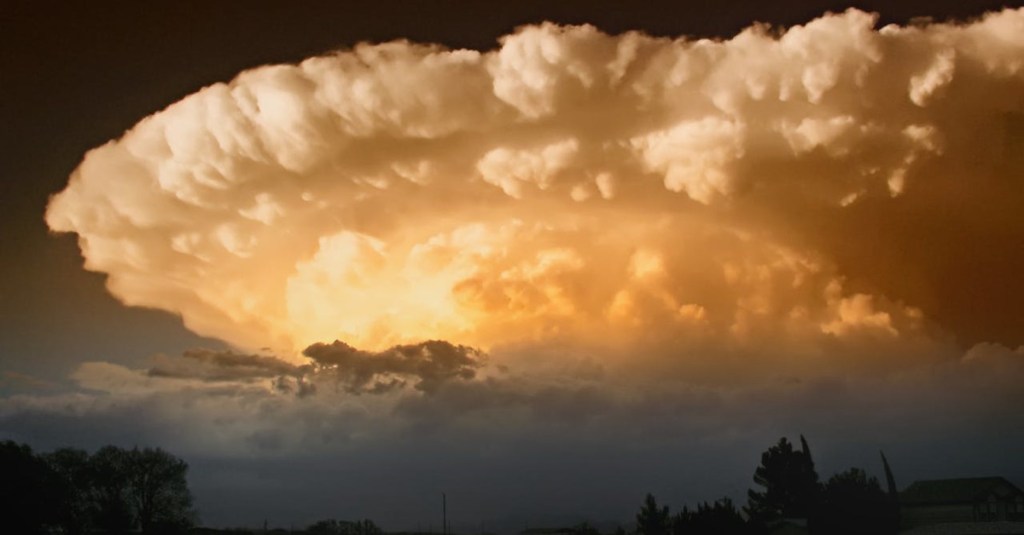
I woke up the other morning to rain. The sky was blank pewter, and the skeleton fingers of bare trees reached toward it like weary supplicants. These days, this is a classic sort of December day in my part of the Midwest; cold enough for flannel and a raincoat, but too warm yet for snow and wool mittens. If you’re into weather-related complaints, you could say these days set the definition of dreary.
This year, I’ve decided I’m not — into weather-related complaints, that is. That morning of rain and gray was perfect, actually. Perfect for a cup of tea reminiscent of soft days reading in front of a bay window. The rain drumming on the skylight was exquisite white noise, and it called to mind my childhood home. I remembered waking to downpours in the wee hours, when we’d rush into the living room to close our skylights, stretching the long crank pole up in the predawn light, our faces misted with rain.
I can control very few things in this world, and whether the sun shines or rain lashes down are not among them. For my part, I’ve decided there’s no such thing as bad weather.
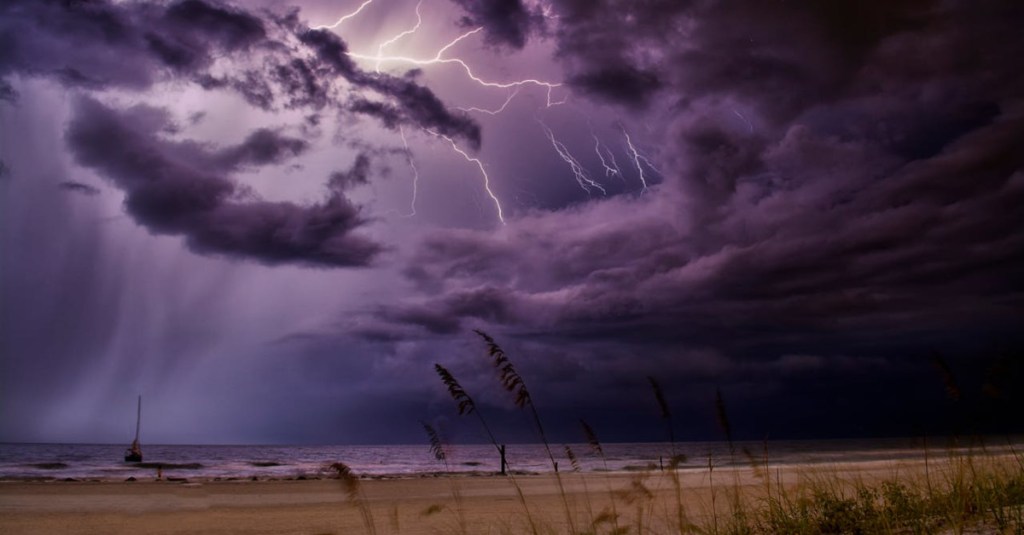
Image by Darina Belonogova on Pexels
Don’t Be Fooled — Weather Can Be Dangerous
Before I start, a caveat: I’m not denying that weather is often dangerous. Earth’s atmosphere is powerful, and weather events can result in terrible damage, injury, and loss of life. We hardly need reminding of this after the devastation wrought by Hurricane Helene.
Unfortunately, global warming means an uptick in extreme weather, both in severity and frequency. Data suggests that hurricanes are likely to be more intense and produce more rainfall due to warming temperatures, and 2024’s preliminary tornado count will make it the second most active year since 1950. (As I type, there’s been another outbreak across the South, so that count may go up right as we’re coming to the finish line.)
The weather can absolutely become someone’s worst nightmare. Of course, capitalism cares most about property damage, which admittedly can upend peoples’ lives (especially when said capital is unable or unwilling to pay out insurance claims). As an (inflation-adjusted) chart maintained by the National Oceanic and Atmospheric Administration shows, more disaster events are costing in the billions.
Mere damage to objects and buildings pales in importance, though, next to the loss of human lives. That, also, we know too well: Hurricane Katrina, the Joplin tornado, the Camp fire, the Lahaina fire … anyone who pays attention to the news is highly aware of the peril and tragedy of a weather disaster. Even supposedly normal weather can pose a danger; one fifth of traffic crashes in the U.S. occur during rain, snow, fog, or other hazardous conditions.
So, while we can accept, find the good in, or be in awe of the weather, in all cases, it still demands our respect.
A Dark Cloud’s Silver Lining
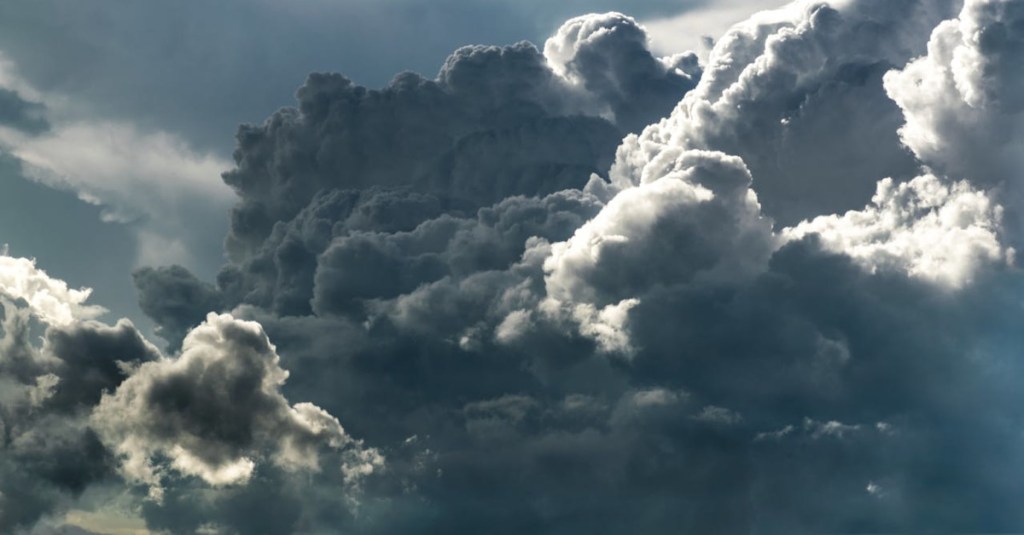
When I was a kid, thunderstorms terrified me. Luckily, I grew up in a place where they were rare and never severe. I was five when the movie “Twister” came out, and over the years, I was both fascinated and horrified every time I stumbled across it on the T.V. Tornadoes seemed an eldritch malevolence, but thankfully remained a remote danger, one that “didn’t happen here.”
This all changed when my family moved to the Midwest. I was 10 and definitely not prepared for what the sky could throw at us. My first tornado warning was a formative experience: the horrible beep interrupting the TV, the ominous computer voice proclaiming the warning … my mom going outside to look up into the swirling clouds and marvel at “the power of nature.” (Thanks, mom. Not my idea of fun at the time!) I didn’t feel much safer in the damp basement, huddled next to the shouting radio while the wind rushed outside like a jet engine. The fact that we were never actually hit by a tornado made the situation horribly opaque; a mystery for the weather people to know and for me to lose my shit over.
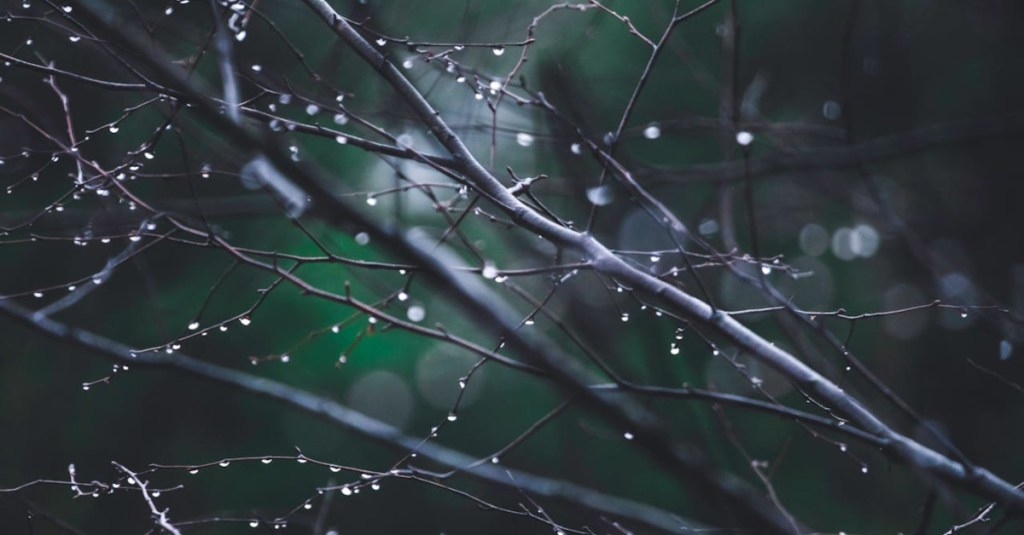
Image by Dariusz Grosa on Pexels
The Poetry of the System
In the face of something scaring his kid, my dad did what any science-minded parent would do: he taught me how to read the weather radar. Suddenly, I had some control, and my terror turned into deep fascination.
Now, every year from late spring and through the summer, I start my day by checking the Storm Prediction Center’s Convective Outlook. If it’s slated to be an active weather day, I take a look at the atmospheric sounding observations to check the available potential energy and wind shear. In the afternoon, as puffy clouds turn into cumulonimbus towers, I glue myself to the radar and watch as the nature’s poetry sweeps across my screen.
Here’s how I think about it:
The universe is a vast, chaotic place full of just about everything imaginable. Beautiful stuff. Catastrophic stuff. Stuff that’s a whole heap of both. (Supernovas, anyone?) How unutterably cool is it that in all that inhospitable jumble, we have a planet full of carefully-balanced, interwoven systems? Life hinges on these systems, but at the same time, their existence is awfully improbable.
The power behind the weather is nothing short of awe inspiring. A hurricane is a vast collection of energy — thousands of nukes’ worth. The most powerful tornadoes are no less impressive, considering their short duration; they pack about 32 terajoules of energy, which comes out to more than 7 kilotons. And that doesn’t even include the power stored in the rest of the storm, which comes out to hundreds of kilotons, or about nine times the power of the Trinity nuclear test. Unlike bombs, though, the energy distilled in the weather isn’t inherently malevolent. When a black hole blasts a gamma ray burst across a galaxy, the outpouring of energy isn’t meant as a curse against those in its path. It simply is — a thread in the giant quilt of existence.
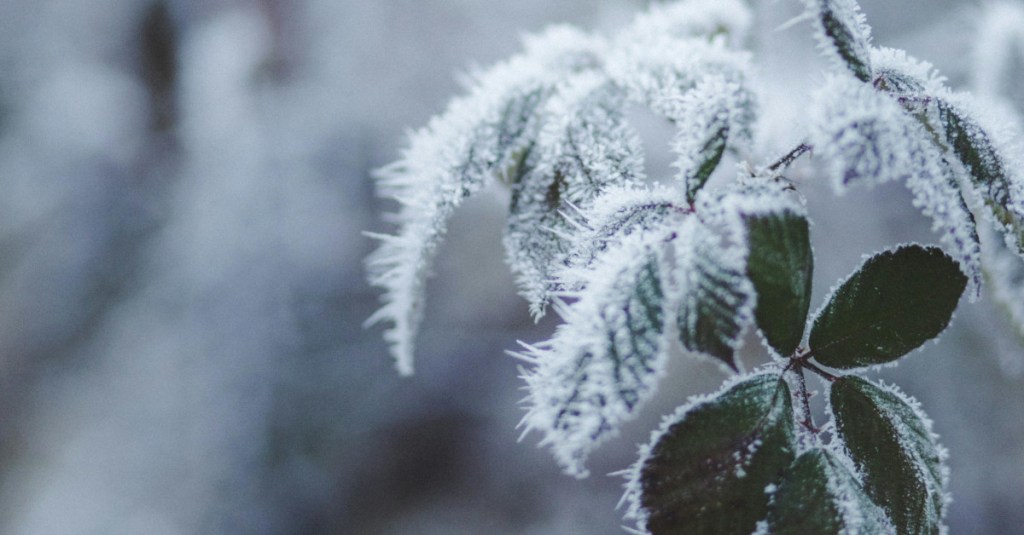
Or, if you’re not into thermodynamics, consider the profound art inherent in nature. Rain-slicked pavement reflects colored lights in the city. In the country, the water adds depth to the colors of foliage. Raindrops glimmer on twigs and fill a forest with gentle music. Dew glistens on blades of grass as morning fog lifts over a meadow. Trees clatter and crackle under a layer of ice as the world seems suspended and preserved in glass. A blanket of fresh snow glitters as if sprinkled with shards of diamond.
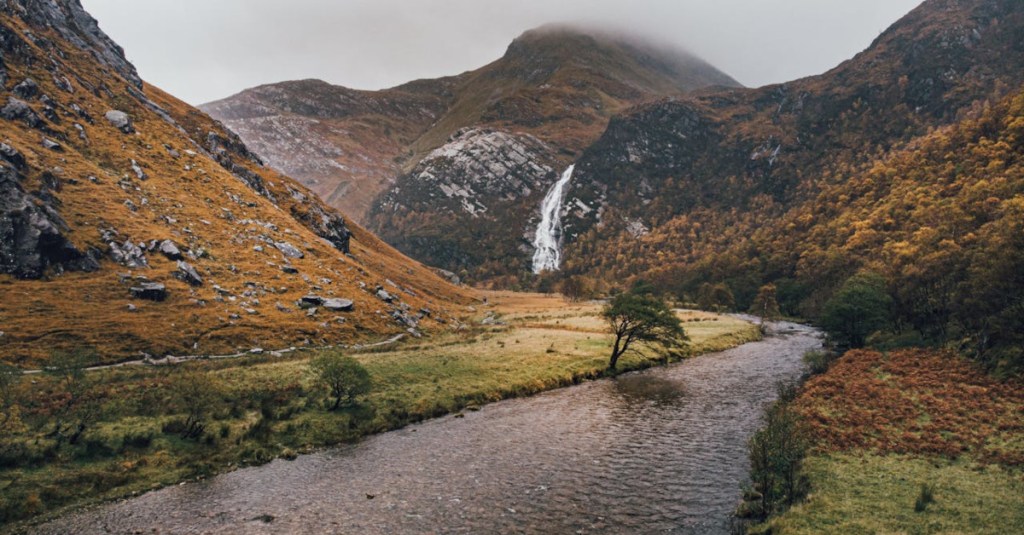
Image by Clément Proust on Pexels
A Good-Weather Year
Here we are again on the threshold of a new year, and to put it mildly, I’m pretty sure it’s going to be a hot mess. I don’t claim to have any predictions other than this: a mess of stuff is going to happen, a good deal of it will be stuff reasonable-minded people will have cause to be upset about, and very little of it will be in our control. And while I don’t believe in new year’s resolutions, I do find myself considering this: of those things beyond my control, is it really worth being perturbed about the rain or fog, snow or storms? I think not.
As I consider the comfort of expectations laid aside — and the beauty nature can offer (be it quiet or loud) — Mary Oliver’s poem “Wild Geese” comes to mind:
Whoever you are, no matter how lonely,
the world offers itself to your imagination,
calls to you like the wild geese, harsh and exciting –
over and over announcing your place
in the family of things.
This year, I’m making a choice about my place in the family of things. I’m looking forward to days full of weather, whatever they may be.


 The Multitasking Millennial
Leave a comment